About the ATT
The Arms Trade Treaty (ATT), was adopted by the UN General Assembly to regulate international trade in conventional arms by establishing the highest international standards and to prevent and eradicate illicit trade and diversion of conventional arms.
The ATT contributes to international and regional peace, security and stability, reducing human suffering, and promoting cooperation, transparency and responsible action among the international community.
Full text versions of the Treaty are available for download in the six official UN languages:
Adoption and entry into force
The ATT was adopted by the UN General Assembly on 2 April 2013 with 154 votes in favour, 3 votes against, and 23 abstentions*. The Treaty opened for signature on 3 June 2013 and entered into force on 24 December 2014 following its ratification, acceptance or approval by 50 states (in accordance with Article 22(1)).
* After the official vote, the delegation of Angola (which had abstained) and Cape Verde (which had not voted) informed the secretariat of the negotiating conference that they had intended to vote in favour of the resolution. Accordingly, 156 States voted in favour of the resolution, 3 voted against it, and 22 abstained from voting.
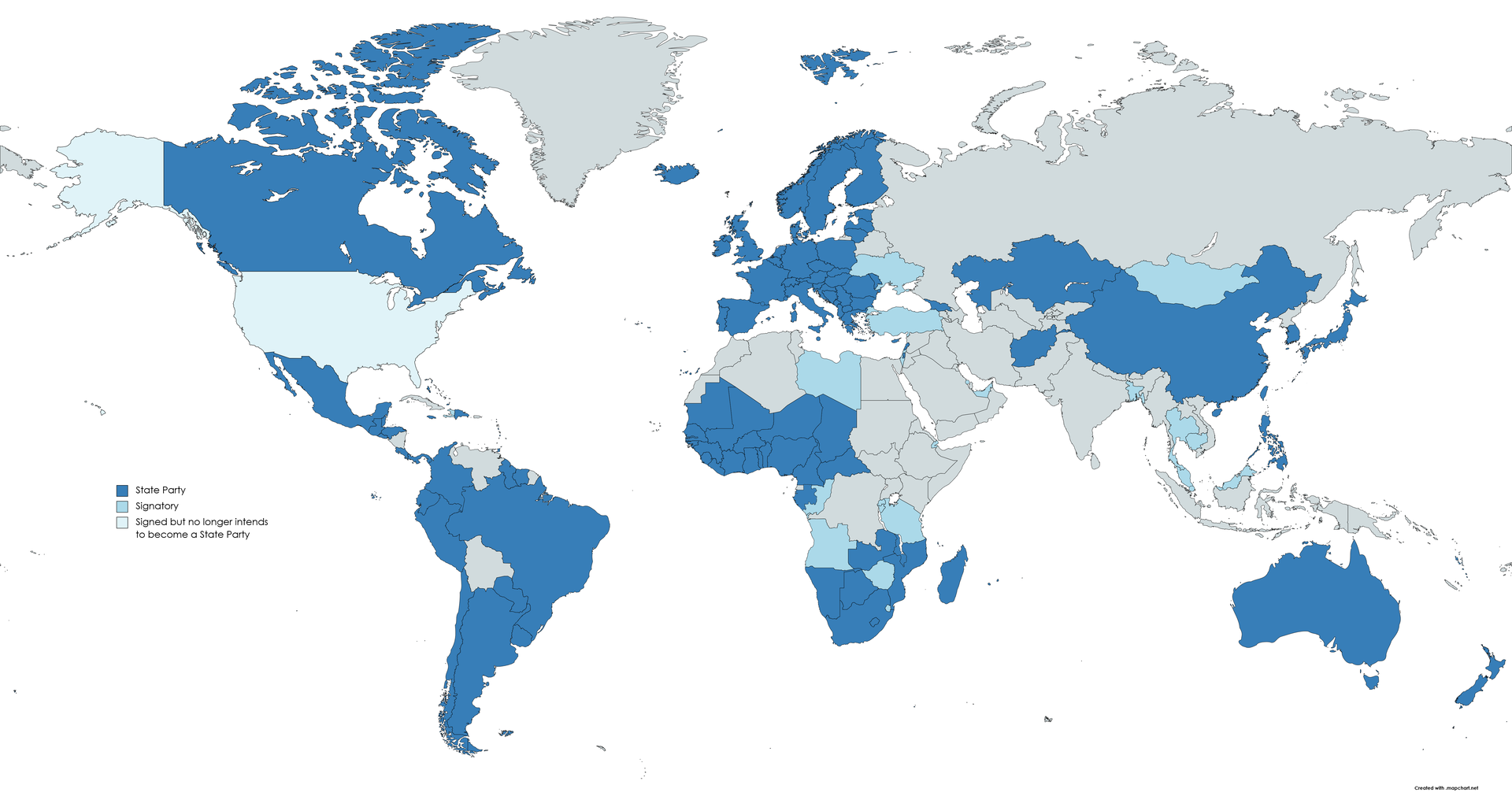
Status of Participation
118
States Parties
States Parties
States that have ratified, accepted, approved or acceded to the treaty.
see list of Alphabetical order
or Order of deposit of instrument
25
Signatories that are not yet States Parties
States that have signed the treaty but not yet ratified, approved, or accepted it.
Benin
Botswana
Burkina Faso
Cabo Verde
Cameroon
Central African Republic
Chad
Côte D'Ivoire
Gabon
Gambia (Islamic Republic of the)
Ghana
Guinea
Guinea Bissau
Lesotho
Liberia
Madagascar
Malawi
Mali
Mauritania
Mauritius
Mozambique
Namibia
Niger
Nigeria
Sao Tome and Principe
Senegal
Seychelles
Sierra Leone
South Africa
Togo
Zambia
Angola
Burundi
Comoros
Congo
Djibouti
Eswatini
Libya
Rwanda
United Republic of Tanzania
Zimbabwe
Algeria
Democratic Republic of the Congo
Egypt
Equatorial Guinea
Eritrea
Ethiopia
Kenya
Morocco
Somalia
South Sudan
Sudan
Tunisia
Uganda
Afghanistan
China
Cyprus
Georgia
Japan
Kazakhstan
Lebanon
Maldives
Philippines
Republic of Korea
State of Palestine
Bahrain
Bangladesh
Cambodia
Israel
Malaysia
Mongolia
Singapore
Thailand
Türkiye
United Arab Emirates
Armenia
Azerbaijan
Bhutan
Brunei Darussalam
Democratic People’s Republic of Korea
India
Indonesia
Iran (Islamic Republic of)
Iraq
Jordan
Kuwait
Kyrgyzstan
Lao People's Democratic Republic
Myanmar
Nepal
Oman
Pakistan
Qatar
Saudi Arabia
Sri Lanka
Syrian Arab Republic
Tajikistan
Timor-Leste
Turkmenistan
Uzbekistan
Viet Nam
Yemen
Albania
Andorra
Austria
Belgium
Bosnia and Herzegovina
Bulgaria
Croatia
Czech Republic
Denmark
Estonia
Finland
Germany
France
Hungary
Greece
Iceland
Ireland
Italy
Latvia
Liechtenstein
Lithuania
Luxembourg
Monaco
Malta
Montenegro
Netherlands
Norway
Poland
Portugal
Republic of Moldova
Republic of North Macedonia
Romania
San Marino
Serbia
Slovakia
Slovenia
Spain
Sweden
Switzerland
United Kingdom of Great Britain and Northern Ireland
Ukraine
Belarus
Russian Federation
Antigua and Barbuda
Argentina
Bahamas
Barbados
Belize
Brazil
Canada
Chile
Colombia
Costa Rica
Dominica
Dominican Republic
Ecuador
El Salvador
Grenada
Guatemala
Guyana
Honduras
Jamaica
Mexico
Panama
Paraguay
Peru
Saint Kitts and Nevis
Saint Lucia
Saint Vincent and the Grenadines
Suriname
Trinidad and Tobago
Uruguay
Haiti
United States of America
(signed but no longer intends to become a party)
Bolivia (Plurinational State of)
Cuba
Nicaragua
Venezuela, Bolivarian Republic of
Australia
New Zealand
Niue
Palau
Samoa
Tuvalu
Vanuatu
Kiribati
Nauru
Fiji
Marshall Islands
Micronesia (Federated States of)
Papua New Guinea
Solomon Islands
Tonga